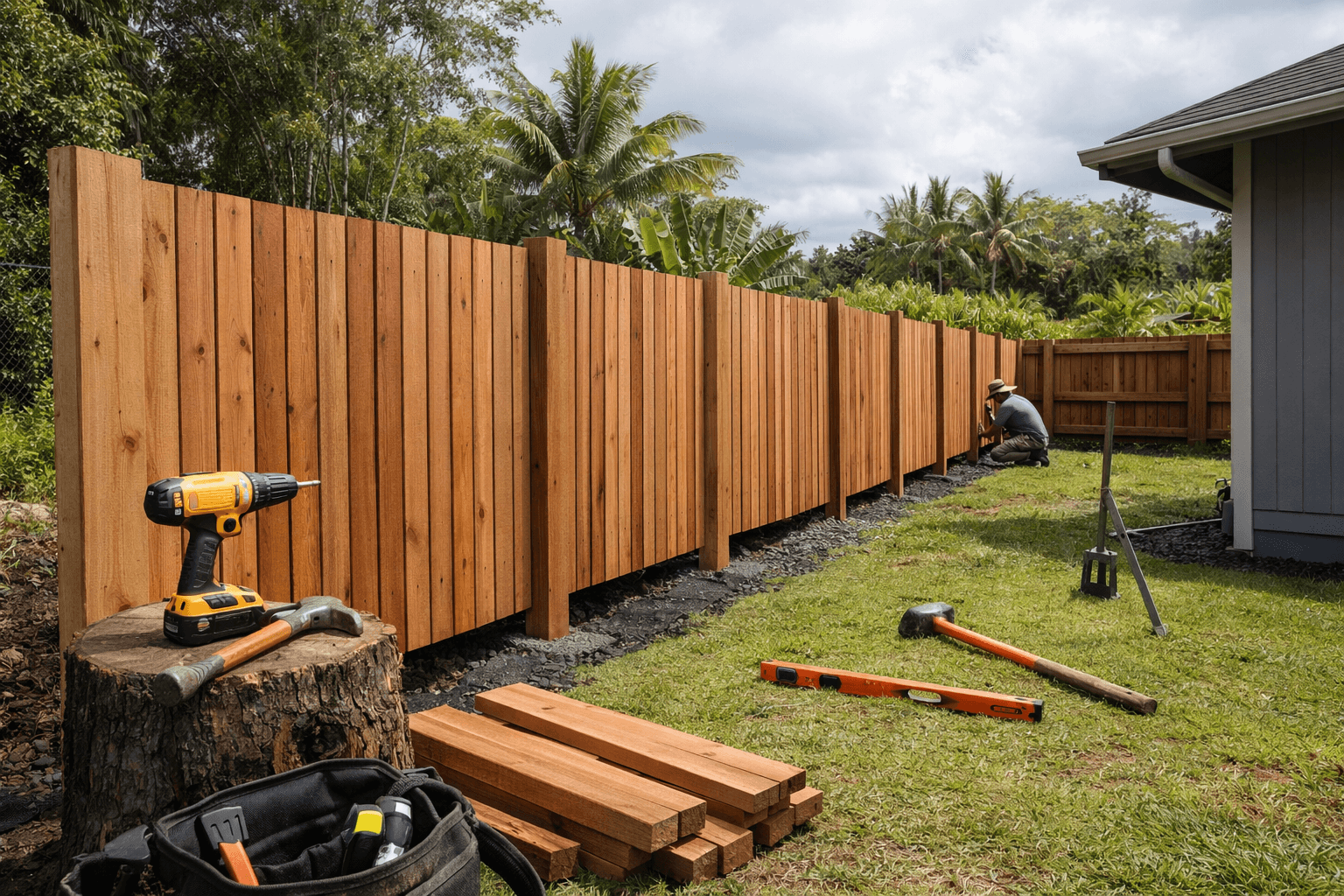
What type of wood fence holds up best in Kea'au's rainy climate?
Redwood, black locust, and tropical hardwoods like ipe hold up best in Kea'au's wet, humid climate. These species have natural oils and dense grain that resist rot, mold, and insect damage — critical in a rainforest-adjacent environment where annual rainfall can exceed 130 inches. Pressure-treated pine is a budget-friendly option but requires more maintenance to stay solid long-term.
How long does a wood fence last in Kea'au, Hawaii?
A properly installed and maintained wood fence in Kea'au typically lasts 10 to 20 years, depending on the species and how well it's treated. Dense hardwoods and rot-resistant species like redwood can reach the higher end of that range. Skipping annual sealing or letting ground contact go unchecked will cut that lifespan significantly in Kea'au's high-moisture environment.
Is wood fencing a good choice for a home in lower Puna or Kea'au?
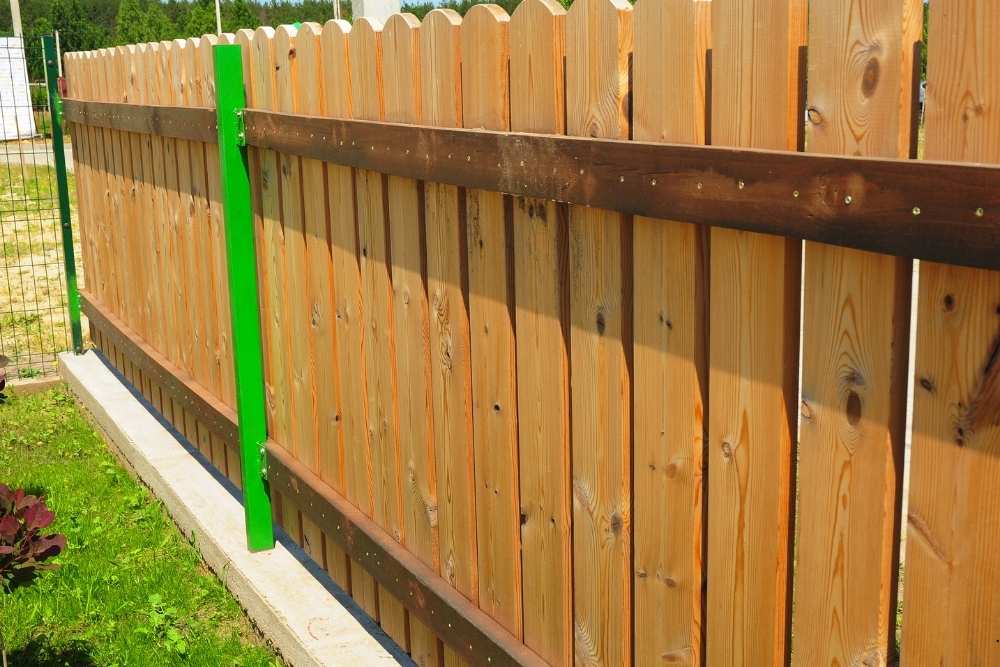
Yes — wood fencing works well in Kea'au and lower Puna when you choose the right species and install it correctly. Wood offers natural beauty, privacy, and solid boundary definition that fits the rural-residential feel of the area. The key is pairing the right lumber with proper drainage, ground clearance, and a consistent maintenance routine to fight off Hawaii's relentless moisture.
Kea'au sits at the edge of one of the wettest micro-climates on the Big Island. That lush green backdrop is beautiful, but it's hard on fences — particularly wood. This guide walks you through which wood species survive and thrive here, how to prep your fence for the long haul, and what maintenance actually looks like in a tropical environment.
Why Kea'au's Climate Is Harder on Wood Than Almost Anywhere Else
Kea'au averages well over 100 inches of rainfall per year in many neighborhoods, and humidity rarely drops low enough for wood to fully dry out between rain events. That combination creates a perfect environment for wood rot, mold, mildew, and termites — all of which eat through the wrong lumber fast.
The area also sees significant variation across short distances. A property at the 800-foot elevation near Volcano Highway gets more rainfall and cooler temperatures than one down toward Pahoa. Even a few miles makes a difference in how your fence weathers. This is why selecting the right wood species isn't a generic decision — it's a local one.
According to the National Weather Service Honolulu Forecast Office, windward areas of the Big Island regularly rank among the wettest locations in the Hawaiian Islands, with some stations recording over 150 inches annually. That's not a stat to ignore when you're picking lumber.
Which Wood Species Should You Use for a Fence in Kea'au?
Not all wood is created equal when it comes to moisture resistance. Here's how the most common fence lumber options compare for this environment.
Redwood
Redwood is one of the top choices for wet climates. It contains natural tannins that resist rot and insects without relying entirely on chemical treatment. It's dimensionally stable, meaning it doesn't warp and cup as severely as softer woods when it goes through wet-dry cycles. It's not always easy to source on the Big Island, so factor in material availability when planning.
Cedar
Western red cedar is another naturally rot-resistant option and one of the more commonly available choices for residential fencing. It's lighter than most hardwoods, easier to work with, and holds stain and sealant well. In Kea'au's climate, cedar needs to be sealed more frequently than redwood — plan on reapplying a quality water-repellent sealant every one to two years.
Tropical Hardwoods (Ipe, Teak, Cumaru)
Tropical hardwoods are the most durable option available. Ipe in particular has a natural density that makes it nearly impervious to moisture, rot, and insects. It's heavy, hard to cut, and more expensive — but it can last 25 years or more with minimal maintenance. If you're fencing a property in Kea'au and want something that truly stands up to the environment long-term, a tropical hardwood is worth the upfront investment.
Pressure-Treated Pine
Pressure-treated lumber is treated with preservatives that resist rot and insects, and it's usually the most accessible and affordable wood option on the Big Island. It works, but it's not the most elegant choice, and it tends to warp and crack more as it dries after installation. In Kea'au's climate, pressure-treated pine is serviceable but will need more attention than naturally resistant species. Always let it dry fully before staining or painting.
Avoid Untreated Softwoods
Standard pine, fir, or any untreated softwood will deteriorate quickly in Kea'au. Some homeowners try to save money with these options and end up replacing sections within a few years. It's not worth it — the labor cost of replacement far outweighs the savings on materials.
Wood Species Comparison for Kea'au's Climate
| Factor | Best Choices | Avoid |
|---|---|---|
| Rot resistance | Ipe, redwood, cedar | Untreated pine or fir |
| Insect resistance | Tropical hardwoods, redwood | Untreated softwoods |
| Maintenance frequency | Ipe (low), redwood (moderate) | Pressure-treated pine (high) |
| Long-term durability | Tropical hardwoods (25+ yrs) | Untreated softwoods (2-5 yrs) |
| Local availability | Cedar, pressure-treated pine | Specialty hardwoods (may need to order) |
- Rot resistance: ipe, redwood, cedar — vs. untreated pine or fir
- Insect resistance: tropical hardwoods and redwood — vs. untreated softwoods
- Maintenance frequency: ipe needs very little; pressure-treated pine needs consistent attention
- Long-term durability: tropical hardwoods can hit 25+ years — untreated softwoods may fail in under five
- Local availability: cedar and pressure-treated pine are easiest to find on the Big Island
How Should a Wood Fence Be Installed in a High-Rainfall Area?
Even the best lumber will fail early if the installation cuts corners. In Kea'au, a few installation details matter more than anywhere else on the island.
Keep Posts Out of Direct Ground Contact
Wood fence posts that sit directly in wet soil are the first thing to rot. Use concrete footings poured below grade and attach your posts with steel post bases or standoff brackets that hold the wood above the concrete surface. This simple step keeps the end grain — the most vulnerable part of any board — out of constant moisture contact.
Allow for Drainage and Airflow
Fence boards that trap water between them become a mold and rot problem fast. Spacing pickets slightly (even a quarter inch) allows airflow and helps boards dry out between rain events. Rails set horizontally should be angled or positioned so water runs off rather than pools on top.
Seal Before Installation, Not After
Applying a penetrating wood sealant to all cut ends and surfaces before the fence goes in the ground is one of the best things you can do for longevity. Once boards are installed, end grain and back faces are hard to reach. Pre-treating ensures full coverage.
Kea'au Wood Fence Maintenance Checklist
- Inspect the fence every 6 months for soft spots, cracking, or discoloration
- Clear vegetation and debris from the base of the fence line — soil contact accelerates rot
- Reapply water-repellent sealant every 1-2 years (cedar) or every 3-5 years (ipe/redwood)
- Check post footings after heavy rain for heaving or shifting
- Sand and re-coat any boards showing mildew or gray weathering before it penetrates deeper
- Trim back any plants or vines growing on the fence — retained moisture is the enemy
- Replace individual boards as needed rather than letting rot spread to posts and rails
What Maintenance Does a Wood Fence Actually Need in Kea'au?
Maintenance isn't optional in this climate — it's what determines whether your fence lasts 8 years or 20. The good news is that a simple annual routine catches small problems before they become big ones.
Twice a year, walk your fence line and look for soft spots in the boards, any gray or black staining (a sign of mildew), and areas where the bottom rail is sitting close to grade. A screwdriver poked into a board tells you quickly whether the wood is still solid or starting to go soft underneath the surface.
The USDA Forest Products Laboratory recommends penetrating oil-based sealants for exterior wood in high-humidity climates, as they condition the wood from within rather than forming a surface film that can peel and trap moisture underneath.
If you catch rot early — in one or two boards — you can replace just those sections without touching the posts and rails. Let it go, and rot spreads laterally into the structural members, which means a full fence replacement instead of a simple repair.
For homeowners dealing with an existing fence that's showing wear, our fence repair and maintenance services can help you assess what's worth saving and what needs to go before the damage spreads.
Should You Consider a Different Material Instead of Wood?
Wood fencing in Kea'au is a real, viable option — but it's worth knowing what else works in this climate. Vinyl fencing is completely immune to rot and requires almost no maintenance, making it a strong alternative for homeowners who don't want to think about sealant schedules. Chain link fencing handles the moisture with ease and is often used for property boundaries, dog kennels, and security perimeters in lower Puna.
That said, nothing quite matches the look of a well-built wood fence for privacy and curb appeal — especially on a forested lot in Kea'au. If the aesthetic matters to you, choosing the right species and committing to maintenance gives you a fence that earns its place on your property for decades.
With over 20 years of experience installing fences across the Big Island — from Kea'au and Pahoa to Hilo and Waimea — our family-owned team knows which materials hold up and which ones don't survive Hawaii's climate. We don't just install and move on. We're not happy until you're thrilled with the final result.
Frequently Asked Questions
Does wood fencing require a permit in Kea'au, Hawaii?
Permit requirements in Kea'au depend on fence height and placement. In Hawaii County, fences under six feet on residential property generally don't require a building permit, but fences along street frontages or on corner lots may have restrictions. Always check with Hawaii County's Department of Public Works and Development before starting any fence installation to avoid compliance issues down the road.
How often should I reseal a wood fence in Kea'au?
In Kea'au's high-rainfall climate, cedar and pressure-treated fences should be resealed every one to two years. Redwood can go two to three years between applications. Ipe and other dense tropical hardwoods need resealing every three to five years. A simple water-bead test tells you when it's time — if water soaks into the wood instead of beading up on the surface, the sealant has worn through and it's time to reapply.
Can I paint a wood fence instead of staining it in Hawaii's climate?
Paint works on wood fences but is generally not the best choice for Kea'au's wet climate. Paint forms a surface film that can peel and trap moisture underneath, leading to rot from the inside out. A penetrating oil-based stain or sealant keeps the wood conditioned without the peeling problem. If you do paint, use a high-quality exterior primer and paint formulated for tropical or marine environments to get the most out of it.
What's the best way to prevent termite damage to a wood fence on the Big Island?
The most effective defense against termites is selecting naturally resistant species — ipe, redwood, and teak contain oils and compounds that termites avoid. For pressure-treated lumber, look for wood treated with borate-based preservatives, which are specifically effective against termites. Keeping the fence base clear of soil contact, debris, and wood chips also reduces the conditions that attract subterranean termites common in lower Puna and Kea'au.
How do I know if my existing wood fence is worth repairing or needs full replacement?
Check the posts first — if the posts are solid, the fence is worth repairing even if boards and rails need replacing. Posts are the most labor-intensive part to replace. If more than 30 to 40 percent of your boards are soft, warped, or cracked, and your posts are showing rot at the base, a full replacement is usually more cost-effective than continued patchwork. A professional inspection gives you a clear answer before you spend money on repairs that won't hold.
Ready to put in a wood fence that's built right for Kea'au's climate? On The Line Fencing is a family-owned, Hilo-based fencing company with over 20 years of experience on the Big Island. We offer free estimates and stand behind every job we do. Contact us today at 808-854-0213 to schedule your free estimate — we're available Monday through Friday, 8:00am to 4:30pm.